
6 Tips for How to Stop a Cat from Spraying
If your cat is spraying, the most effective way to stop it is to understand why they’re doing it in the first place. Cat spraying is almost always communicating something: territorial stress, hormonal drive, anxiety, or a medical issue, and the fix depends entirely on the cause. The good news is that with the right approach, spraying is one of the most treatable behavior problems in cats. This post will cover 6 veterinarian-recommended tips to stop cat spraying, how to tell if your cat is actually spraying or just missing the litter box, and the signs that mean it’s time to bring in professional help. Read through all six — because for many cats, the solution is simpler than you think.
What Is Cat Spraying and Why Do Cats Do It?
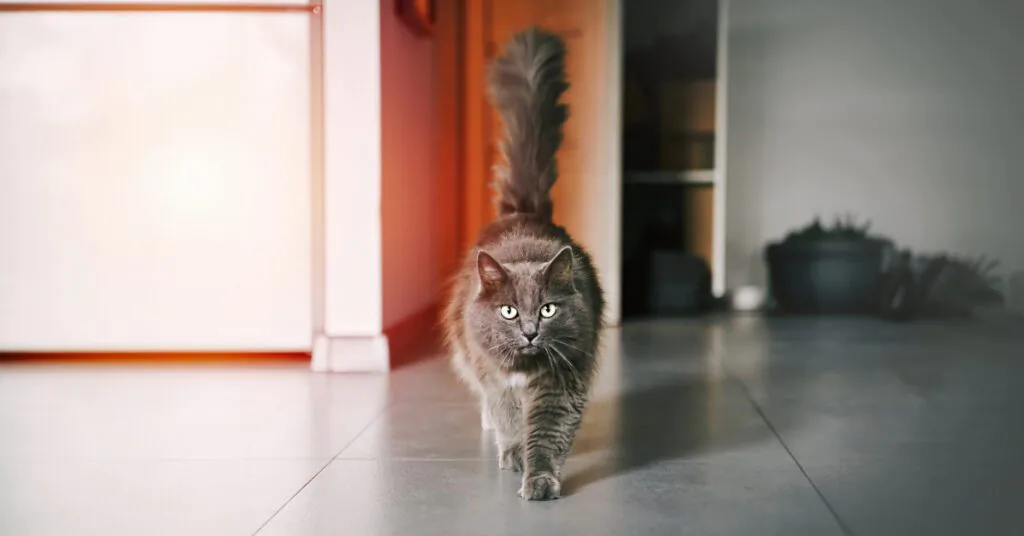
Cat spraying, also called urine marking, is when a cat deposits a small amount of urine on vertical surfaces like walls, furniture, doors, or curtains. Unlike urinating outside the litter box, spraying is a deliberate form of communication. Cats spray to mark their territory, signal reproductive status, or respond to stress and anxiety. The urine used in spraying has a stronger odor than regular urine because it contains additional pheromones intended to send a message to other cats.
Both male and female cats can spray, though intact males are the most likely to do it. Understanding the difference between cat spraying and inappropriate elimination (urinating outside the litter box for other reasons) is important because the approach to stopping them differs. If your cat is squatting and urinating on flat surfaces, that may be a litter box problem rather than spraying. If your cat is backing up to a vertical surface, tail quivering, and depositing a small amount of urine, that’s spraying.
6 Tips to Stop a Cat from Spraying
The most effective strategies for stopping cat spraying address the underlying reason your cat is doing it. Here are six of the most impactful steps cat owners can take.
Tip 1: Spay or Neuter Your Cat
The single most effective way to prevent cat spraying is to spay or neuter your cat. Intact male cats are the most prolific sprayers, and the behavior is driven largely by hormones. Studies show that neutering reduces or eliminates spraying in approximately 90% of male cats. Spaying female cats also significantly reduces the likelihood of spraying.
If your cat hasn’t been spayed or neutered and is spraying, this is the first conversation to have with our veterinary team at Providence Veterinary Hospital and Clinic. Even cats who were neutered or spayed later in life can benefit. While spraying behaviors are more likely to persist in cats altered as adults versus kittens, improvement is still common after the procedure.
Tip 2: Rule Out a Medical Problem
Before assuming cat spraying is entirely behavioral, it’s worth having your cat examined by a veterinarian. Medical conditions like urinary tract infections (UTIs), feline idiopathic cystitis (FIC), bladder stones, or kidney disease can cause cats to urinate in unusual places or more frequently.
If your cat has recently started spraying or has changed their urination habits, a veterinary exam at Providence Veterinary Hospital and Clinic can rule out a physical cause before you focus on behavioral solutions.
Tip 3: Identify and Reduce Stress Triggers
Stress is one of the leading causes of cat spraying. Cats are highly sensitive to changes in their environment, and almost anything can trigger a spraying response: a new pet, a new baby, moving furniture, changes in the household routine, outdoor cats visible through windows, construction noise, or even a new type of cat food. Stopping cat spraying often means identifying what has changed and addressing it directly.
Common strategies for reducing environmental stress include providing vertical space (cat trees, shelves) where your cat can observe their territory from a safe height, giving each cat in a multi-cat household their own resources (food bowls, water bowls, litter boxes, sleeping spots), and blocking sight lines to outdoor cats if window-watching triggers spraying. A synthetic feline facial pheromone diffuser, can also help reduce stress-related spraying in some cats. Ask your vet whether it might be appropriate for your situation.
Tip 4: Clean Sprayed Areas Thoroughly
Cats are drawn back to spray in areas where they have sprayed before because the scent signals “this is my territory.” To stop a cat from re-spraying the same spots, you need to eliminate the odor completely, not just mask it. Standard household cleaners won’t do the job. You need an enzymatic cleaner specifically designed to break down the proteins in cat urine. Thoroughly saturate the affected area, let it dry completely, and repeat if needed. Avoid cleaners containing ammonia, which actually smells like urine to a cat and can reinforce the behavior.
Tip 5: Manage a Multi-Cat Household Carefully
Tension between cats in the same household is a very common cause of cat spraying. Cats are territorial animals, and competition for resources like food, water, litter boxes, resting spots, and even your attention can create ongoing stress that leads to urine marking. The general recommendation for litter boxes is one per cat plus one extra. Position resources in multiple locations throughout the home so no single cat can “guard” access.
If you’ve recently added a new cat to the household, a slow, structured introduction process significantly reduces the likelihood of spraying and other conflict behaviors. If existing cats in your home are in active conflict with one another, a consultation at Providence Veterinary Hospital and Clinic can help you develop a plan to manage the tension and reduce marking behavior.
Tip 6: Talk to Your Vet About Behavioral Support
When environmental changes and stress reduction aren’t enough to stop cat spraying, behavioral medication may help. Anti-anxiety medications, prescribed by a veterinarian, can reduce the anxiety that drives spraying in some cats, particularly in chronic or severe cases. These medications are not a permanent solution on their own, but when paired with environmental management, they can break the cycle and give behavioral interventions a better chance of working.
Referral to a veterinary behaviorist may also be recommended in complex or difficult-to-resolve cases. Your vet at Providence Veterinary Hospital and Clinic can help you determine the right path forward for your cat.
How to Know If Your Cat Is Spraying or Just Not Using the Litter Box
This distinction matters because the approaches to stopping them are different. Here’s a quick comparison:
- Cat spraying: Small amount of urine on vertical surfaces; tail held upright and quivering; cat backs up to the surface; typically not accompanied by crouching
- Inappropriate elimination: Larger volume of urine on horizontal surfaces (rugs, floors, furniture); cat squats as they would in a litter box; often related to litter box aversion, medical issues, or stress
If you’re unsure which behavior your cat is displaying, a video on your phone and a vet visit can help clarify. Both issues are treatable, but starting with the right diagnosis makes all the difference.
Can You Stop an Older Cat from Spraying?
Yes, though it may take more time and effort than with younger cats. Older cats who have been spraying for years have often developed a strong habitual pattern, and breaking it requires consistent environmental management, thorough odor elimination, and sometimes medical support.
A cat who is spraying in response to a specific trigger, like an outdoor cat or a new pet in the home, can often be helped significantly by addressing that trigger directly, regardless of age. If your older cat has recently started spraying and previously hadn’t, this warrants a veterinary exam. New onset spraying in a senior cat can sometimes signal a medical issue, cognitive decline, or pain-related stress.
Signs You Need Veterinary Help to Address Cat Spraying
Some situations call for professional support rather than a wait-and-see approach. Reach out to Providence Veterinary Hospital and Clinic if:
- Your cat’s spraying started suddenly or is getting worse
- The spraying is paired with signs of discomfort, straining, or blood in the urine
- You have a multi-cat household where conflict appears to be driving the behavior
- Environmental changes haven’t reduced the spraying over several weeks
- You’ve tried enzymatic cleaners and removed triggers but the behavior persists
A Calmer Home for You and Your Cat Starts with the Right Plan
Cat spraying is stressful for pet owners, but with the right approach, it’s also one of the most solvable behavior problems in cats. From spay/neuter counseling to stress management strategies to behavioral medications, the veterinary team at Providence Veterinary Hospital and Clinic in Alameda, CA has the tools and experience to help you and your cat find relief. You don’t have to navigate this alone. Give us a call at one of our locations or book an appointment online, and let’s work through this together.
Recent Posts

Why Does My Dog Keep Sneezing?
Why Does My Dog Keep Sneezing? One sneeze, two sneezes, three sneezes…and now you’re Googling. When your…

Is It Normal That My Dog Is Eating Grass?
Is It Normal That My Dog Is Eating Grass? Yes, it’s normal for dogs to eat grass,…

Why Is My Cat Sneezing? 8 Common Causes Explained
Why Is My Cat Sneezing? 8 Common Causes Explained One sneeze is cute. Two sneezes is a…

My Dog Was Stung By a Bee — What Should I Do?
My Dog Was Stung By a Bee — What Should I Do? If your dog was stung…

Can Dogs Eat Fruit?
Can Dogs Eat Fruit? Yes, dogs can eat many types of fruit, but not all fruit is…
About Providence Veterinary Hospital & Clinic
Providence Veterinary Hospital & Clinic serve Alameda, CA as well as Oakland, San Leandro, and the surrounding areas with superb veterinary medicine and gentle, compassionate care. We’ve been a part of this community since 1947 when a veterinarian started seeing pets in his home after the end of World War II. He built an animal hospital right under his house, and that’s where we remain to this day (with modern remodeling in 2016, to outfit the hospital with the latest medical technology and equipment, of course!).